MA, Qing Angel
馬清教授
Professor, Department of Linguistics and Modern Language Studies
Associate Dean (Research and Postgraduate Studies), Faculty of Humanities
The Education University of Hong Kong
Overview
Professor Angel Ma Qing has studied in China and Belgium, and worked in Macao SAR, before joining The Education University of Hong Kong (EdUHK) in 2008. She has served as programme leader of MATESOL and Associate Dean (Research and Postgraduate Studies) at the Faculty of Humanities, EdUHK. Professor Ma established and has conducted research into CBLP, a new approach to language teaching. This CBLP has achieved a global reach: more than 8,000 language teachers use it to teach over 30,000 students in more than 800 schools and universities in over 80 countries and regions. Her CBLP research unveils key theoretical concepts, creates and assesses the effectiveness of a CBLP training framework, and measures its impact on language teachers and students. As a result, her CBLP research has led to successful adoption of CBLP as a language policy by 16 institutions in Hong Kong, mainland China and internationally.
Research Interests
- •Second language vocabulary acquisition
- •Corpus linguistics, corpus-based language pedagogy (CBLP), corpus-based literary studies
- •Computer-assisted language learning (CALL)
- •Mobile-assisted language learning (MALL)
- •Applications of artificial intelligence in language education
Featured Projects
Academic Qualification
Ph.D. Applied Linguistics, University of Louvain, Belgium, 2007
MEd. Educational Research, Free University of Brussels, Belgium, 2001
B.A. English Language & Literature, Wuhan University, China, 1996
Awards
The Network Citation Award
August 28, 2025 • The Education University of Hong Kong
"Best Paper Article" at the 4th International Conference on Creative and Innovative Technology in Education
July 1-2, 2025 • University of Technology Malaysia, Malaysia
President's Award for Outstanding Performance in Research
May 20, 2025 • The Education University of Hong Kong
2025 TESOL Award for Excellence in Research
March 19, 2025 • USA
"Best Paper Award" at the International Conference on TeLLT & CoLLT 2024
July 05, 2024 • Hong Kong
Award for Excellent FE Supervision
June 2024 • EdUHK, Hong Kong
Dean's International Research Collaboration Award
October 16, 2023 • FHM, EdUHK, Hong Kong
"The Best Paper Presentation Award" at the 2nd APSCE International Conference on Future Language Learning 2023
May 31, 2023 • Beijing, China
Finalist of University Grants Committee (UGC) Teaching Award
September 28, 2021 • Hong Kong
President's Award for Outstanding Performance in Teaching
May 27, 2021 • The Education University of Hong Kong
2020 Esperanto "Access to Language Education" Award
June 2, 2020 • USA
Faculty Teaching Award 2019-2020
May 2020 • The Education University of Hong Kong
Silver Medal of the 47th International Exhibition of Inventions of Geneva
April 12, 2019 • Switzerland
Journal Editorship
- • Associate Editor of Computer Assisted Language Learning (CALL)
- • Associate Editor of Language Learning & Technology (LL&T)
- • Associate Editor of the International Journal of Computer-Assisted Language Learning and Teaching (IJCALLT)
- • Associate Editor of Journal of China Computer Assisted Language Learning (ChinaCALL)
- • Associate Editor of Research and Practice in Technology Enhanced Learning (RPTEL)
Research Outputs
Journal Articles (50 publications)
Tracing the Development of Periphrastic Causatives of EFL Learners From Different L1 Backgrounds: Insights From Learner Corpora.
Zhi, Y., Ma, Q., Chueng, H. (2025)
Sage Open (SSCI, B)
TPACK for Corpus Technology: TESOL Student Teachers' Growth and Self-Efficacy in Independent Language Learning and Teaching.
Ma, Q**., Yan, J., Lee, C. K., & Crosthwaite, P. (2025)
ReCALL, 1-7
Exploring the Impact of AI-Assisted Speaking Practice on EFL Learners' Speaking Proficiency and Motivation: A Mixed-Method Study.
Shen, J., Qian, B., Ma, Q., & Deris, F. D. (2025)
International Journal of Academic Research in Progressive Education and Development, 14(4), 43-52
Supporting Low-Proficiency L2 Learners' Vocabulary Learning With Custom GPT-Scaffolded Corpus-Based Language Pedagogy: A Case Study.
LIU, J. & MA, Q., Aug 2025
Computer Assisted Language Learning (E-pub ahead of print)
A Systematic Review of Data-Driven Learning Research on Language Learning and Teaching for Pre-Tertiary Learners: Balancing Qualitative and Quantitative Research.
Huang, S. & Ma, Q., Aug 2025
Learning and Individual Differences, 122, 102752
Bridging Classroom and Real-Life Learning Mediated by a Mobile App With a Self-Regulation Scheme: Impacts on Chinese EFL Primary Students' Self-Regulated Vocabulary Learning Outcomes, Enjoyment, and Learning Behaviours.
Yang, Y., Song, Y., & Yan, J., Ma, Q. (2025)
System, 131, 103671 (SSCI, A*)
Technology-Enhanced Self-Regulation Training: A Dynamic Training Model to Facilitate Second Language Vietnamese Learners' Self-Regulated Writing Skills.
Tran, T. T. T., & Ma, Q**. (2025)
System, 130, 103625 (SSCI, A*)
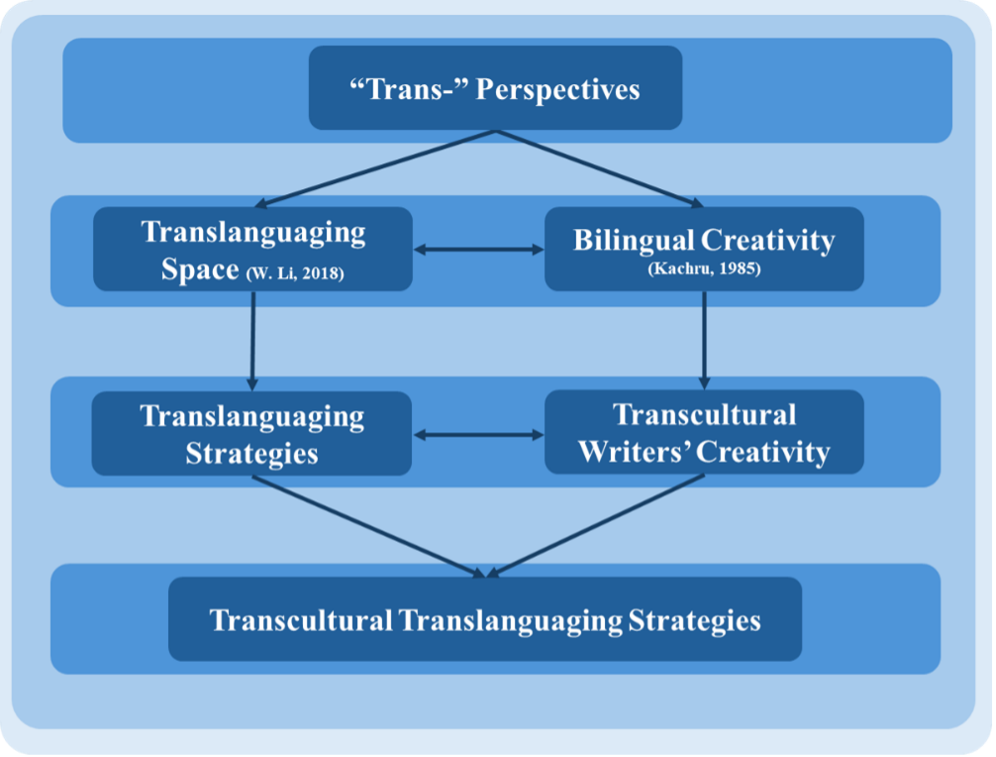
Exploring Transcultural Translanguaging Strategies in English Literature of a Bilingual Chinese Author: A Corpus-Based Study.
MA, Q., SU, X., ERNI, J. N. & XU, Z., 2025
Asian Englishes, 27(2), 404-424 (ESCI, A)
Theory-Supported Corpus Pedagogy for ESL Pre-Service Teachers: Using Parallel EAP Corpora for Language Learning.
Yan, J., & Ma., Q**. (2025)
Journal of China Computer-Assisted Language Learning (E-pub ahead of print)
Examining Corpus-Based Language Pedagogy (CBLP) Practices in Data Driven Learning (DDL) for Low-Proficiency L2 English Learners.
LIU, J. & MA, Q., Apr 2025
Educational Technology & Society, 28(2), 53-76 (SSCI, A)
Exploring Undergraduate Students' Learning Experience and Engagement in Synchronous Online Teaching Supported by Corpus-Based Language Pedagogy.
CHEUNG, L. M. E., MA, Q. & SUN, D., Jan 2025
Research and Practice in Technology Enhanced Learning, 20, 18
Exploring EFL students' pronunciation learning supported by corpus-based language pedagogy.
MA, Q., MEI, F. & QIAN, B., Nov 2024
Computer Assisted Language Learning (E-pub ahead of print)
Exploring EFL vocabulary learning through the story continuation writing task: A mixed-methods study.
Tu, M. Ma, Q**., & Jiang, L. (2024)
Australian Review of Applied Linguistics
Online peer feedback training based on self-regulated learning in English as a foreign language writing: Perceived usefulness and students' engagement.
TRAN, T. T. T. & MA, Q., Dec 2024
Studies in Educational Evaluation, 83, 101418 (SSCI, A)
Developing advanced citation skills: A mixed-methods approach to corpus technology training for novice researchers.
YAN, J. L. & MA, Q., Nov 2024
Journal of English for Academic Purposes, 72, 101451
Exploring collaborative writing among large groups in online distance learning through a public online forum and private chat tool.
Mei. F., Ma, Q**., Tang, J., & Zou, B. (2024)
ReCALL (SSCI, A*)
Exploring EFL learners' perceived promise and limitations of using an artificial intelligence speech evaluation system for speaking practice.
ZOU, B., LIVIERO, S., MA, Q., ZHANG, W., DU, Y. & XING, P., 2024
System, 126, 103497
Exploring ChatGPT literacy in language education: A global perspective and comprehensive approach.
MA, Q., CROSTHWAITE, P., SUN, D. & ZOU, D., 2024
Computers and Education: Artificial Intelligence, 7, 100278
Effect of localized task-based language teaching on Chinese secondary school English learners' oral production in examination-oriented contexts.
Lu, J., Ma, Q**., & Li, S. (2024)
International Journal of Applied Linguistics, 35(1), 168-192
Self-regulated and collaborative personalised vocabulary learning approach in MALL.
MA, Q. & CHIU, M. M., Jun 2024
Language Learning and Technology, 28(1), 1-28 (SSCI, A*)
A corpus-based approach to Chinese English study: Pinning down the 'Chineseness' and implications for creative writing in English in China.
Yu, A. & Ma, Q., 2024
Asian Englishes, 26(1), 1-20
Online technologies for language learning and teaching: Innovations, practices and perceptions from students and teachers.
MA, Q. & WANG, L., 2024
Journal of China Computer-Assisted Language Learning, 4(1), 1-5
Learning by design: Enhancing online collaboration in developing pre-service TESOL teachers' TPACK for teaching with corpus technology.
MA, Q., LEE, H. T. H., GAO, X. A. & CHAI, C.-S., Oct 2024
British Journal of Educational Technology, 55, 2639-2667
Teacher paths for developing corpus-based language pedagogy: A case study
MA, Q., YUAN, R. E., CHEUNG, L. M. E. & YANG, J., 2024
Computer Assisted Language Learning. 37, 3, p. 461-492
A systematic review of research on immersive technology-enhanced writing education: The current state and a research agenda.
CHEN, Y., LI, M., HUANG, C., CUKUROVA, M. & MA, Q., 2023
IEEE Transactions on Learning Technologies, 17, 919-938
Teachers' perceived corpus literacy and their intention to integrate corpora into classroom teaching: A survey study
MA, Q., CHIU, M. M., LIN, S. & MENDOZA, N. B., Jan 2023.
In: ReCALL. 35, 1, p. 19-39
Developing an AI-based learning system for L2 learners' authentic and ubiquitous learning in English language.
JIA, F., SUN, D., MA, Q. & LOOI, C. K., Dec 2022
Sustainability, 14(23), 15527
Online language education courses: A Chinese case from an ecological perspective.
MEI, F. F., LU, Y. & MA, Q., Dec 2022
Journal of China Computer-Assisted Language Learning, 2(2), 228-256
Inquiry into online learning communities: Potential for fostering collaborative writing.
WU, W., MA, Q. & SANTOS, I. M., Aug 2022
Journal of China Computer-Assisted Language Learning, 2(1), 20-44
The development of corpus-based language pedagogy for TESOL teachers: A two-step training approach facilitated by online collaboration.
MA, Q., TANG, J. & LIN, S., 2022
Computer Assisted Language Learning, 35(9), 2731-2760
How to empirically and theoretically incorporate digital technologies into language learning and teaching.
MA, Q. & YAN, J. L., May 2022
Bilingualism: Language and Cognition, 25(3), 392-393
Review of corpus tools for vocabulary teaching and learning.
MA, Q. & MEI, F., 2021
Journal of China Computer-Assisted Language Learning, 1(1), 177-190
The effectiveness of corpus-based training on collocation use in L2 writing for Chinese senior secondary school students.
FANG, L., MA, Q. & YAN, J. L., 2021
Journal of China Computer-Assisted Language Learning, 1(1), 80-109
Using formative assessment in a blended EFL listening course: Student perceptions of effectiveness and challenges.
TRAN, T. T. T. & MA, Q., Jul 2021
International Journal of Computer-Assisted Language Learning and Teaching, 11(3), 17-38
Affordances of a mobile learner-generated tool for pupils' English as a second language vocabulary learning: An ecological perspective.
SONG, Y. & MA, Q., Mar 2021
British Journal of Educational Technology, 52(2), 858-878
Examining the role of inter-group peer online feedback on wiki writing in an EAP context.
MA, Q., 2020
Computer Assisted Language Learning, 33(3), 197-216
University L2 learners' voices and experience in making use of dictionary apps in Mobile Assisted Language Learning (MALL).
MA, Q., Oct 2019
International Journal of Computer-Assisted Language Learning and Teaching, 9(4), 18-36
Book review – How vocabulary is learned, by Stuart Webb & Paul Nation, Oxford, 2017, 322 pp.
MA, Q., 2018
The Journal of Asia TEFL, 15(1), 250-251
A multi-case study of university students' language-learning experience mediated by mobile technologies: A socio-cultural perspective.
MA, Q., 2017
Computer Assisted Language Learning, 30(3-4), 183-203
Teaching young learners English vocabulary with reading-based exercises in a real classroom situation.
MA, Q. & SIN, C. H., 2015
Porta Linguarum, 23, 125-138
Realising personalised vocabulary learning in the Hong Kong context via a personalised curriculum featuring 'student-selected vocabulary'.
CHOI, M. L. & MA, Q., 2015
Language and Education, 29(1), 62-78
A process-focused learning model for L2 vocabulary acquisition: Construction, implementation and validation.
MA, Q., 2015
International Journal of Applied Linguistics, 166(1), 127-162
A contextualised study of EFL learners' vocabulary learning approaches: Framework, learner approach and degree of success.
MA, Q., 2014
The Journal of AsiaTEFL, 11(3), 33-71
Matching vocabulary learning process with learning outcome in L2 academic writing: An exploratory case study.
MA, Q., Jun 2013
Linguistics and Education, 24(2), 237-246
Upholding standards of academic writing of Chinese students in China English.
MA, Q., Sept 2012
Changing English, 19(3), 349-357
Vocabulary learning and teaching beliefs of pre-service and in-service teachers in Hong Kong and mainland China.
GAO, X. & MA, Q., Nov 2011
Language Awareness, 20(4), 327-342
Overcoming hurdles to Chinese students' learning of English lexis.
MA, Q. & KELLY, P., Dec 2009
Changing English, 16(4), 405-412
Empirical CALL evaluation: The relationship between learning process and learning outcome.
MA, Q., Sept 2008
CALICO Journal, 26(1), 108-122
From monitoring users to controlling user actions: A new perspective on the user-centred approach to CALL.
MA, Q., Oct 2007
Computer Assisted Language Learning, 20(4), 297-321
Computer assisted vocabulary learning: Design and evaluation.
MA, Q. & KELLY, P., Feb 2006
Computer Assisted Language Learning, 19(1), 15-45
Refereed Academic Books
Ma, Q, Lee, H., & Crosthwaite, P. (Forthcoming). Advancing English Language Teaching: A Guide to Corpus-Based Language Pedagogy. Springer.
Alm, A, Lai, C., & Ma, Q. (2025). Transitions in CALL. Castledown.
Wang, L., Ma, Q., & Zou, D. (2025). Technology-Enhanced and Corpus-based Language Learning and Teaching: Innovations and Insights. Cambridge Scholars Publishing.
Ma, Q. (2009). Second Language Vocabulary Acquisition. New York, Berlin, Oxford: Peter Lang.
Refereed Book Chapters (16 chapters)
AI and language assessment.
Crosthwaite, P., & Ma, Q. (2025)
In Y. Wang, A. Alm, & G. Dizon (Eds.), Insights into AI and language teaching and learning (pp. 77-96). Castledown.
Corpus Literacy and Data-Driven Learning.
Ma, Q. (2025)
In L. McCallum & D. Tafazoli, (Eds.), The Palgrave Encyclopedia of Computer-Assisted Language Learning. Palgrave Macmillan, Cham.
Lessons Learned from Emergency Remote Teaching.
Wu, W., Ma, Q. (2025)
In: McCallum, L., Tafazoli, D. (Eds) The Palgrave Encyclopedia of Computer-Assisted Language Learning. Palgrave Macmillan, Cham.
AI-based approaches to assessing speaking skills.
Zou, B., & Ma, Q. (2025)
In L. McCallum & D. Tafazoli, (Eds.), The Palgrave Encyclopedia of Computer-Assisted Language Learning. Palgrave Macmillan, Cham.
Corpus-based language pedagogy for pre-service and in-service teachers: Theory, practice and research.
Ma, Q. (2024)
In P. Crosthwaite (Ed.), Corpora for Language Learning: Bridging the Research-Practice Divide (pp. 174-186). Routledge. (B)
Emergency online teaching: Voices of Hong Kong CALL lecturers.
Wu. W., Ma, Q., Shi, H., & Tong, E. (2023)
In D. Tafazoli & M. Picard (Eds.), Handbook of CALL Teacher Education and Professional Development (pp. 193-208).
Online learner communities for fostering autonomous learning beyond the classroom.
Wu, W., & Ma, Q. (2022)
In H. Reinders, C. Lai, & P. Sundqvist. (Eds.), The Routledge Handbook of Language Learning and Teaching Beyond the Classroom (pp. 258-270). England: Routledge.
How do university L2 learners make use of mobile dictionary apps to become autonomous learners?
Ma, Q., & Yan, J. (2022)
In B. Zou, M. Thomas, D. Barr & W. Jia. (Eds.), Emerging Concepts in Technology-Enhanced Language Teaching and Learning (pp. 177-199). IGI-Global.
Chinese EFL online technology and teacher education: A multi-case study from an ecological perspective.
Hu, H., Ma, Q., & Tang, J. (2020)
In H-S. Kang, D-S. Shin & T. Cimasko (Eds.), Online Education for Teachers of English as a Global Language (pp. 187-209). New York: Routledge.
Measuring the vocabulary knowledge of Hong Kong primary school second language learners through word associations: Implications for reading literacy.
Ma, Q. & Lee, H. Y. (2019)
In B. L. Reynolds & F. Teng (Eds.), English Literacy Instruction for Chinese Speakers (pp. 35-56). Singapore: Palgrave Macmillan.
Technologies for teaching and learning L2 vocabulary.
Ma, Q. (2017)
In C. A. Chapelle & S. Sauro (Eds.), The Handbook of Technology and Second Language Teaching and Learning (pp. 45-61). Oxford: Wiley Blackwell.
The nativization of English in China.
Ma, Q., & Xu, Z. (2017)
In Z. Xu, D. He, & D. Deterding (Eds.), Researching Chinese English: The State of the Art (pp. 189-201). Dordrecht: Springer.
Community of practice: Building a mobile learning community in a higher education institution to promote effective teaching and learning.
Wang, L., & Ma, Q. (2017)
In S. C. Kong, T. L. Wong, M. Yang, C. F. Chow, & K. H. Tse (Eds.), Emerging Practices in Scholarship of Learning and Teaching in a Digital Era (pp. 19-38). Singapore: Springer.
An evidence-based study of Hong Kong university students' mobile assisted language learning (MALL) experience.
Ma, Q. (2016)
In A. Gimeno, M. Levy, F. Blin, & D. Barr (Eds.), WorldCALL: Sustainability and Computer-Assisted Language Learning (pp. 211-229). New York: Bloomsbury.
Computer assisted vocabulary learning: Framework and tracking user data.
Ma, Q. (2013)
In P. Hubbard, M. Schulze, & B. Smith (Eds.), Learner-Computer Interaction in Language Education (pp. 230-243). San Marcos, Texas: Computer Assisted Language Instruction Consortium (CALICO).
In search of ways in which Chinese English teachers can come to change and improve their learners' vocabulary learning strategy use.
Ma, Q. (2011)
In S. Breidbach, D. Elsner, & A. Young (Eds.), Language Awareness in Teacher Education: Cultural-Political and Social-Educational Perspectives (pp. 158-173). Frankfurt/M.: Peter Lang.
Guest Editor for Special Issues
Corpus-Based Language Pedagogy in the AI Era [Special issue].
Ma, Q., & Crosthwaite, P. (2024)
Computer Assisted Language Learning
Advancing Second Language Learning and Teaching through Innovative Technologies and Digital Tools [Special issue].
Ma, Q., & Lai, C. (2024)
Education Sciences
Online Technologies for Language Learning and Teaching: Innovations, Practices and Perceptions from Students and Teachers [Special issue].
Ma, Q., & Wang, L. (2024)
Journal of China-Computer Assisted Language Learning, 4(1)
Research Grants
External Grants
2025.9-2027.12. AI-empowered CBLP-supported Writing Pedagogy and Resources for EAP Teachers and Students across Different Disciplines (850,000 $HK, *IICA T5014; PI)
2024.1-2026.6. Investigating student teachers' TPACK development for corpus technology and their self-efficacies for independent language learning and teaching: a mixed method study (469,560 $HK, *GRF; PI)
2019–2023. A Study on Teaching and Assessment of Critical Thinking-Oriented English Writing Based on Toulmin Theory (CNY 200,000, *National Social Science of China; Co-I)
2019.9-2021.9. A Self-Regulated Vocabulary Learning Approach Supported by a Mobile-User-Generated-Content Tool for Pupils in Hong Kong (522,720 $HK, *GRF; Co-I)
2019.4-2022.3. A Self-Regulated and Personalised Vocabulary Learning Approach Mediated by Mobile Technologies for University Students (745,980 $HK, *GRF; PI)
2019.1-2020.12. The Relationship between Learners' Out-of-Class Autonomous Technology-Enhanced Language Learning and Their Vocabulary Knowledge (529,935 $HK, *GRF; Co-investigator (Co-I))
2012.1–2013.12. *Wrong to Right: A Cognitive Linguistic Approach to the Analysis of Second Language Errors (574, 080 $HK, *GRF; Co-I)
Internal Grants
2023.9-2026.8: Asian literature in English: Creativity, translanguaging, and language education (2,608,000.00 $HK, CRAC 04A40; PI)
2023.1-2025.12: Enhancing Digital Literacy for English Pronunciation Learners in the Era of Technology Empowerment. Scientific Research Porgramme of the Department of Education of Hubei Province (No. B2023408) (CNY 20,000; Co-I)
2022.4-2025.8: Creating an international community of English teachers with reinforced learning of a corpus-based language pedagogy (1,800,000 $HK, CRA 4A32; PI)
2019.9-2022.8: The development and evaluation of an innovative corpus-based language teaching approach among school in-service teachers in the Greater Bay Area or beyond (1,200,000 $HK, CRAC; PI)
2017.9-2018.8: A self-regulated and personalised vocabulary learning approach mediated by mobile technologies for Hong Kong and mainland Chinese university students (80,000 $HK, IRG; PI)
2017.6-2018.5: Educational Linguistics 2.0 – The use of corpora in language teaching (250,000$HK, KTF; PI)
2015.9-2016.8: Investigation of university students' self-regulated mobile-assisted vocabulary learning (MAVL) across different language learning contexts (100,000 $HK, IRG; PI)
2014.12-2015.12: A comparative multi-case study of Hong Kong and mainland Chinese university students' self-regulated mobile-assisted vocabulary learning (MAVL) (100,000 $HK, IRG; PI)
2012.3–2013.3: Investigating the Features of Chinese Students' Written English from a World Englishes' Perspective (35,000 $HK, DRG; PI)
2010.7–2011.6: Matching Learning Process with Learning Outcome: Focusing on L2 Vocabulary Acquisition (20,000 $HK, DRG; PI)
2009.8–2010.10: Comparing Pre-service and In-service Teachers' Vocabulary Instruction Beliefs (20,000 $HK, DRG; PI)
2009.3–2010.7: Assessing Vocabulary Strategy Use through a Process-Oriented Learning Approach (199,600 $HK, IRG; PI)
Doctorate Supervision
Completed (26 students)
2021 - 2025: Principal supervisor of Yan Jiahao's PhD Thesis; title: Improving novice researchers' literature review writing with corpus-based language pedagogy: Focusing on rhetorical functions and move structures, EdUHK (viva date: June 10).
2017 - 2023: Principal supervisor of Guan Chao's EdD thesis; title: Incorporating DIY Corpus into English Writing in a Higher Vocational Institute in China: Students' Outcomes and Their Perceptions, EdUHK.
2018 – 2023: Principal supervisor of TRAN Thi Thanh Thao's PhD Thesis; title: Exploration of a Technology-Enhanced Self-Regulation Training Model for Enhancing Students' Academic Writing Skills and Self-Regulated Writing Capacities in the Vietnamese Tertiary Context, EdUHK (Hong Kong PhD Fellowship Scheme).
2017 – 2022: Principal supervisor of Lu Jinmiao's EdD thesis; title: Localising Task-Based Language Teaching in China's Examination-oriented Context: Exploring the Effectiveness of a Localised Task-Based Language Teaching Form on Oral Performance, EdUHK.
2013 – 2016: Principal supervisor of Yu Aihui's EdD thesis; title: A Study of "Chineseness" in a Chinese English Literary Work from the Perspectives of Sociolinguistics and Cultural Linguistics, EdUHK.
2010 – 2013: Principal supervisor of Choi Muilan's EdD thesis; title: Realizing Personalized Learning with L2 Vocabulary Learning and Teaching, EdUHK.
2011 – 2013: Principal supervisor of Qiu Xiaoyuan's EdD thesis; title: Understanding Mainland Chinese Junior Secondary School Students' Metacognitive Strategies in Reading English and Chinese, EdUHK.
On-going supervision (9 students)
2025–Present: Principal supervisor of Zhao Yingtong's PhD thesis, EdUHK
2025–Present: Principal supervisor of Lan Shanxik's EdD thesis, EdUHK
2025–Present: Principal supervisor of Wei Qi's EdD thesis, EdUHK
2025–Present: Principal supervisor of Hubert Lee's PhD thesis, EdUHK
2023–Present: Principal supervisor of Liu Jing's EdD thesis, EdUHK
2023–Present: Principal supervisor of Sophia Huang's EdD thesis, EdUHK
2023–Present: Principal supervisor of Fannie Mei's EdD thesis, EdUHK
External Appointment
Member of TESOL Research Professional Council, TESOL International Association, 2025–present
External Examiner of MA in English Language Teaching and Assessment program, Hang Seng University of Hong Kong, 2023–present
Deputy Director of Computer-Assisted Language Learning Association of China, 2022–present